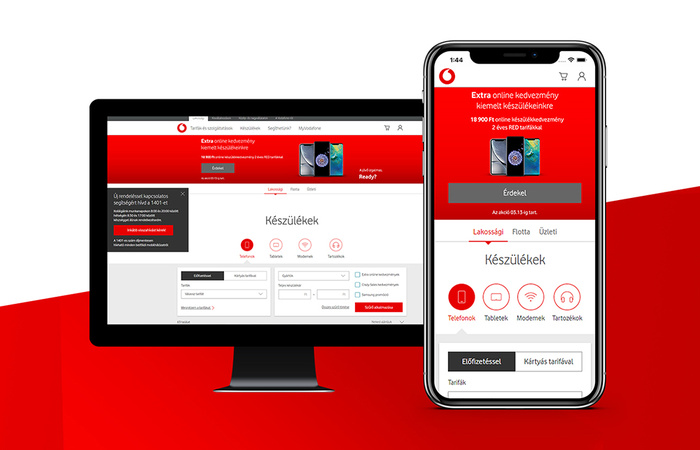
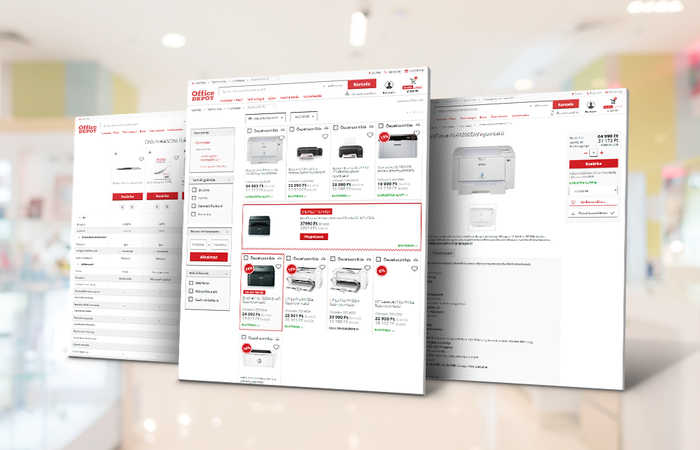
Successful, customized, complex webshop development to build a profitable revenue stream for your company. Ordering facilitation, incentives, innovative features based on UX research, customized solutions for online sales growth and high conversion rates from LogiNet, an expert team with a proven track record in international markets, with multiple digital products at your customers' disposal.
Before webshop development: planning is the key to a successful webshop
Pre-specification: our professional consultants will prepare a detailed pre-specification, describing exactly the customer needs for the launch of the webshop and the key features of the system to be developed
E-commerce consultation: thanks to our e-commerce and UX expertise, we provide practical suggestions to clients from the initial design phase
Custom-made e-commerce solutions:our products allow us to provide tailored e-commerce solutions for companies at different stages of digitalisation
Website development to meet customer needs
Our expert team creates online stores that maximise customer needs, supporting high conversion and sales growth.
User-friendly interface: easy navigation and a transparent online interface are key to retaining customers, reducing customer frustration and increasing the efficiency of the buying process.
Search engine-friendly structure: building a search engine-optimised (SEO) store is essential to ranking high in search engines. This will increase the visibility and traffic of your online store.
Secure transactions: protecting customers' personal and financial data is a top priority. We have created several webshops that have obtained PCI DSS audit certification.
Customer-tailored features: features are added to the webshop that customers need. Based on more than 10 years of experience, we build best practice solutions into webshops that put you ahead of the competition.
10 reasons to choose LogiNet as your e-commerce development partner
Professionalism: more than 10 years of experience in the e-commerce market, wide range of clients (SME sector, large enterprises, international partners
Various sector references: pharmaceutical, FMCG, DIY
Stable, well-prepared team: our staff use the latest technological solutions
Webshop development step-by-step: needs assessment, pre-definition and specification, development, UX design, testing, post-development operation, administration and support services, priority customer service
Ecosystem approach: we offer solutions adapted to the level of development of the companies (mobile app, B2C, B2B web store, customized in-store digital solutions, web archiver, digital loyalty card app)
Recognition in website development: we have been awarded "Website of the Year" several times
System integration approach: we provide seamless integration with other business management systems, logistics, billing and payment systems, price comparison sites, marketing solutions
International experience: English-speaking colleagues who have participated in several of our projects abroad
Provision of advice and professional support: dedicated contact during development, operation and support, UX tracking service, provision of professional training materials, organisation of webinars and partner meeting
E-commerce solutions from LogiNet for all your e-commerce development needs
B2C webshop:sells products or services directly to end users, consumers
B2B marketplace:the platform helps to match buyers and sellers, in this case buyers are businesses and sellers are manufacturers, wholesalers, suppliers
D2C (Direct to Customer) webshop: the manufacturer sells its products directly to the consumer, leaving out wholesalers, external partners and all other intermediaries from the distribution chain
Online website development steps
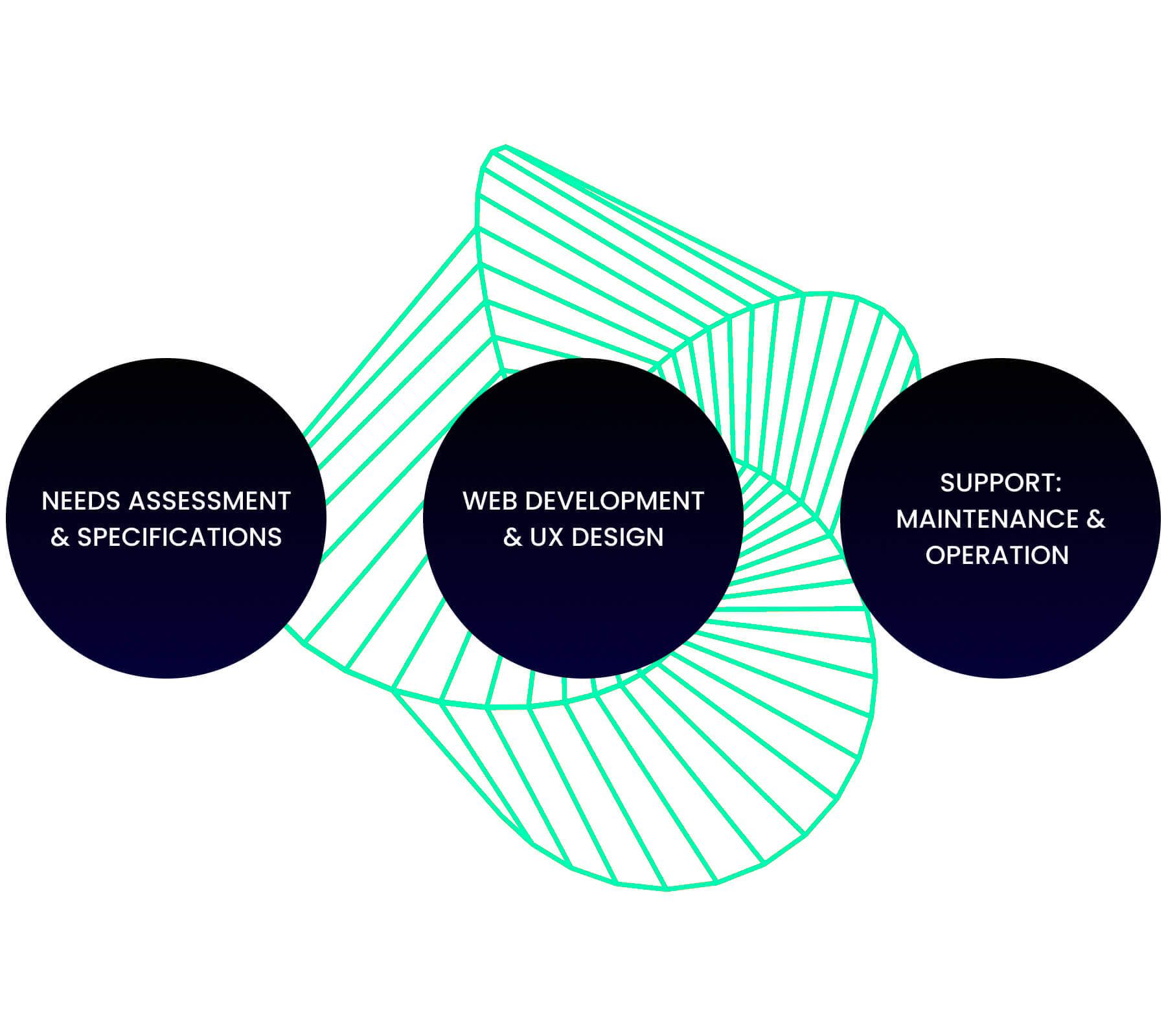
The process of creating a webshop consists of several important steps. LogiNet covers the entire process of online store development.
Needs assessments and planning
Preliminary consultation, indicative offer
Specification drafting
Accurate quotation and estimated project schedule
Web store development and UX design
UX and UI design, user testing, interviews, research
E-commerce store development
Testing
Demo
Online store live testing
Support
Active support after the website goes live.
Ongoing implementation of minor improvements
Operation (administrator) and maintenance service
Online store development - systems integration experience
We provide seamless integration with other ERP systems. Learn more about our references:
In which cases is it necessary to launch an online store?
An online store is necessary when a company is expanding its existing sales network with an online sales channel or when a new company wants to focus exclusively on e-commerce. A website may also be justified if competitors already have a significant online presence and need to do so to remain competitive, or if the company is aiming to expand internationally. A well-designed e-commerce solution can increase brand awareness and optimise the user experience (omnichannel), thereby strengthening customer loyalty and increasing sales. An e-commerce platform also enables retailers to respond quickly to market changes, improve business processes, reduce costs and better understand their customers by analysing data.
How does an online store launch support sales?
Launching an e-commerce website offers significant benefits for sales, as the opening of an online channel removes geographical boundaries, allowing wider access to products and services. Unlike traditional physical shops, which have fixed opening hours, a website allows customers to shop from anywhere at any time. The e-commerce channel allows for a detailed analysis of customer data, enabling a company to better understand customer behaviour, thus enabling more targeted communication and personalised offers that improve conversion rates. An online store usually means lower operating costs, allowing for more competitive prices and higher profit margins. An e-commerce site offers a user experience that allows for a faster and smoother shopping process, which increases customer loyalty and expands the customer base. The company can also respond flexibly to market trends, addressing customer needs during peak shopping periods, which also contributes to improved competitiveness.
The steps to create an online store
The first step in developing a web store is to define your business objectives and the products or services you want to sell. This is followed by market research, which involves assessing the target market, competitors and customer needs. The next step is to select the right e-commerce platform. The design of the e-commerce store is key, including the design of the user interface (UI) and the optimisation of the user experience (UX). The technical development of the website should include the necessary integrations with payment solutions, delivery providers and other third-party services (e.g. CMS, ERP). Proper testing before the online store goes live is essential, and after the live launch, ongoing maintenance and updates, with appropriate marketing activities to drive sales.
What are the options for starting an online store, what online platform to choose from?
There are several platforms for starting a webshop, depending on the level of development of the business, the functionality and type of webshop (B2C, B2B, i.e. wholesale webshop) and the budget. If a company is looking for a quick and easy solution, rental platforms (e.g. Shoprenter, Shopify, Unas) can be ideal, offering ease of use, a wide range of integrations and templates to allow companies to customise their online channel within certain limits. One of the benefits of growing company sales is that you can reach a point where the rental solution is no longer making a profit, but is working against the company. Since custom development is not always possible, after a while a rented platform becomes a dead end. It is also worth keeping in mind that in terms of pricing, it is based on the revenue generated by the webshop (e.g. higher fees after 1 million USD). For e-commerce stores, the next step is the standard introduction of open/closed source software (e.g. Magento, WooCommerce) or a custom-built e-commerce store.
How to start a new e-commerce site, and what preparations and market research should be done?
To start an online store, you should first develop a detailed business plan, including the target market, competitors, financial plan, and sales strategy. Thorough market research is key to helping the company better understand the needs of the target audience, the behaviour of competitors, pricing, and to understand market niches and opportunities. The company must know its target audience, i.e. exactly who it wants to sell to, what their buying habits are and what their needs are. During the market research, it is also important to look at logistics processes and transport costs. It is also worth being aware of the necessary legal requirements, including data protection rules and consumer protection laws.
How much does it cost to create a webstore?
The cost of a e-commerce website varies and depends on a number of factors, including the choice of platform, the functionality required (this also depends on the nature of the e-commerce website, i.e. B2C or B2B), the integrations required, etc. A rented ecommerce store may cost less than a stand-alone store. In addition, the domain name registration and the hosting provider's fees should be taken into account. Ongoing costs also include maintenance, support, content maintenance, marketing and advertising costs.
How long does it take to develop a web store?
The time it takes to design and launch an online store can vary depending on how complex and unique the project is. For simpler, leased platforms, it can be up and running in a matter of days or weeks, while for custom development it is longer, which can mean several months.
What payment options should be integrated into the e-commerce site?
It is advisable to integrate several payment options into the website to meet different customer needs. Popular payment methods include credit and debit card payments, PayPal, Apple Pay, Google Pay, bank transfer and cash on delivery. The payment solutions offered must comply with the PCI DSS (Payment Card Industry Data Security Standard) requirements, which guarantees the secure handling of card data. In addition, the installation of a Secure Socket Layer (SSL) certificate is essential to guarantee the security of the data transmission on your website. It is also worth asking for 2-factor authentication from the customer, as strong customer authentication (SCA) can prevent online fraud.
What logistics should you pay attention to, and what delivery options should you offer your customers?
When deciding on delivery methods, it is important to know the needs of your customers and the logistical options available. The company must meet the delivery deadline, so choose a partner where this is guaranteed and where you can integrate your logistics software smoothly into your e-commerce site. It is important that the customer can choose between different delivery methods, such as home delivery, personal collection of the product in the shop, parcel points, and parcel machines. Transparency in the delivery process is key so that customers can keep track of the products they buy. In addition to the delivery of goods, the management of returns is also essential for the company: the customer must be informed in detail about the method and conditions for returning the products purchased.
What legal requirements must an online store comply with?
An online shop must comply with several legal requirements to ensure customer privacy and consumer protection. Firstly, you must obtain consent from users to collect and use their data by data protection laws and comply with the General Data Protection Regulation (GDPR). You must also create a General Terms and Conditions (GTC) document detailing your terms and conditions of purchase, return policy, delivery information and warranty terms. These documents must be easily accessible and understandable to buyers. To ensure secure payment processes, the online shop should be PCI DSS compliant to protect customers' credit card details.
What regular maintenance is required for an online shop?
Regular maintenance of the webshop is essential to keep the business running smoothly and securely. This includes software updates to ensure the website is up and running with the latest features and security patches.
Learn more about us, how we work, how we help our customers grow online!
(The video is available in Hungarian language.)
We were planning to start an online platform and got in touch with LogiNet through a referral. I would like to emphasize that their openness and problem-solving skills were impressive. LogiNet completed the project on time, they always accepted our needs with an open mind, and even if it wasn't completely clear what we asked for, they solved it. Today, 40% of our partners place orders on the webshop, which is an important milestone for us.
HELIT Kft.
Csordás-Takács Attila,
Our goal was to develop a new website which is more secure, ergonomic, has new features and can bring more conversion rates. The most impressive thing about LogiNet is that they are flexible and so easy to work with. Project management at LogiNet is great, we had some issues and extra needs since the launch, but always managed quickly and well. Always try to understand the customer’s needs and find a solution even if it's not so easy in a COTS system with unique developments and components.
Baranyi Bálint, Mountex, Head of Marketing
Request a quote
Boost your business efficiency and revenue with custom software solutions built around your real needs.
Share your ideas and goals with us, and we’ll be in touch shortly to see how we can help.